Feb 27, 2025 | All, SKA-spain, SRCs
27/02/2025 – The Spanish prototype of the SKA Regional Centre, under development by the IAA-CSIC, becomes the first centre to successfully complete its integration into SRCNet0.1, the first operational version of the international network that will constitute the scientific heart of the SKA Observatory (SKAO).
SKAO is an international organization building two state-of-the-art radio telescopes: SKA-Low in Australia, with over 130,000 dipole antennas for transmitting and receiving radio waves, and SKA-Mid in South Africa, with 197 parabolic antennas, each 15 meters in diameter. When the observatory's telescopes are operational, they will generate over 700 million gigabytes of data annually. All this data will be housed at SKA Regional Centres (SRCs), where it can also be accessed remotely. The various SRCs, distributed around the world, will be interconnected, forming a global network: SRCNet.
Last Monday, February 24, it was announced that the Spanish prototype of the SKA Regional Center, being developed at the Institute of Astrophysics of Andalusia (IAA-CSIC), was the first to complete the deployment and integration of the services required to become part of SRCNet0.1. This initial operational version of the international network will be fundamental for the functioning of the SKA Observatory (SKAO).
The Spanish prototype of SRC, called espSRC, is one of 17 national initiatives contributing to the development of SRCNet. “We have been working on this project since 2019, demonstrating our firm commitment to the development of SRCNet as a collaborative platform. Being the first center to deploy the necessary services to become an SRCNet0.1 node is a result of this commitment and close collaboration with the other international groups involved,” says Susana Sánchez-Expósito, technical coordinator of espSRC at the IAA-CSIC. “We currently have a fully functional system that has served more than 30 scientific projects in different branches of astrophysics,” she adds. Isabel Márquez, scientific director of the Severo Ochoa program at the IAA-CSIC, also highlights: “It is this multidisciplinary approach that makes the SRC prototype one of the key pillars, and a cross-cutting element in our scientific strategy, funded by our Severo Ochoa excellence project. Having an infrastructure of this level at our center positions Andalusia and Spain within the international SKA collaboration.”
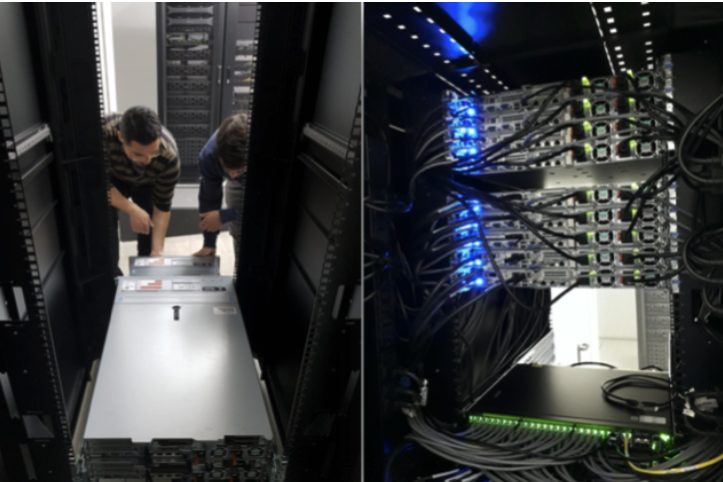
Members of the Spanish SKA team assembling the servers for the Spanish SRC Prototype (2020). Credit: IAA-CSIC
For her part, Lourdes Verdes-Montenegro, a researcher at the IAA-CSIC, coordinator of Spanish participation in SKAO, and head of the espSRC, emphasizes that “SKAO embraces sustainability and open science among its founding principles, and our prototype stands out as a benchmark for implementing both aspects within the SRCNet.” Open science is based on the principle of research reproducibility. According to UNESCO, this approach is increasingly recognized as a fundamental accelerator for achieving the Sustainable Development Goals (SDGs). To this end, it is essential that data, methods, and analytical tools be available to society. “SKAO will change the way science is done: it will no longer be possible to work locally on our computers, and the SRCs will constitute the scientific core of SKAO, providing an environment that fosters and facilitates collaboration between international teams following the principles of open science,” concludes Lourdes Verdes-Montenegro.
Jan 23, 2025 | All, Science, SKAO
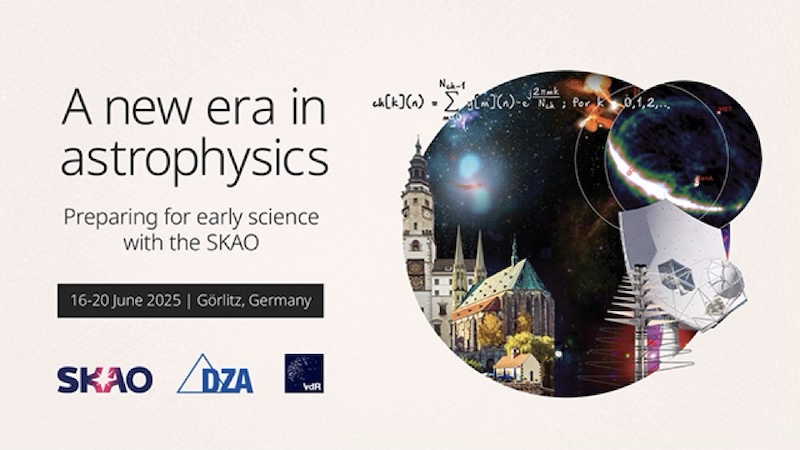
23/01/2025 - A new era in astrophysics: Preparing for early science with the SKAO
Görlitz, Germany, 16-20 June, 2025
Abstract deadline: February 7, 2025
Registration is now open, early reduced-rate registration closes March 31.
More information and registration:
https://www.skao.int/en/science-users/skao-science-meeting-2025
Taking place just two years before the SKA telescopes will be tested on the first community-chosen targets, the meeting will bring together scientists from across the globe to discuss and collaborate on the cutting-edge science opportunities that the SKAO will provide in its early years of operations. Online participation will be supported for the whole week for those unable to attend in person.
Full details about the meeting are available at the #SKAOsci2025 website. #SKAOsci2025.
Jan 23, 2025 | All, Science, SKAO
Note that the SKAO White Book early draft deadline has been adjusted, and instead there is a general deadline for chapter submissions of September 2025,whereupon a peer review process will commence.
Chapters will have a maximum length of 8 pages. More info, latex templates, etc, available here: https://www.skao.int/en/science-users/557/advancing-astrophysics-ii
Jan 23, 2025 | All, Science
22/01/2025 - A radio transient with the longest period yet seen, 2.9 hrs, was discovered by a team including Nanda Rea of ICE-CSIC and published in December 2024.
The team found the transient in low-frequency archival data from the SKAO precursor Murchison Widefield Array (MWA). Such long-period radio transients are a fairly new area of research and it is challenging to determine how the signals are generated. In this case, the team managed to find the probable source for the energy bursts, using another SKA precursor, MeerKAT, and optical SOAR observatory, and determine that the optical counterpart is a cool M3 dwarf star. This means that the signal is not due to a magnetar, but more likely is generated in a dwarf binary system scenario.
Read more:
ICE-CSIC press release
ICRAR press release
Paper: Hurley-Walker et al., 2025
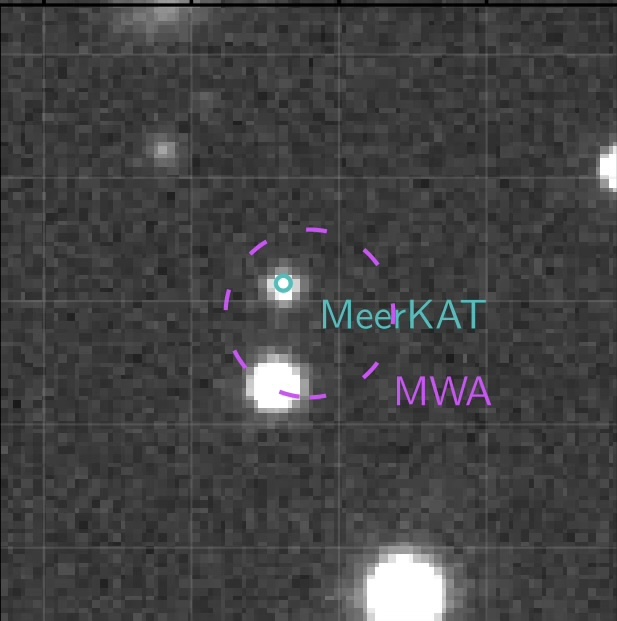
Using 2 SKAO precursors, the team could trace the 2.9 hr long-period transient radio source to a specific object and measure its counterpart in optical to find an M3 dwarf star. Image credit: Hurley-Walker at al, 2024..
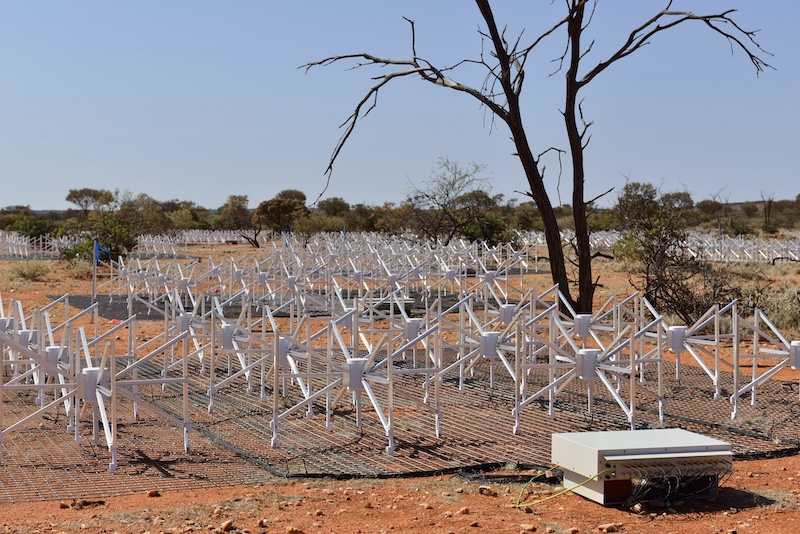
The team found the radio signal in archival data from the Murchison Widefield Array radio telescope, an SKAO precursor. Image credit: ICRAR/Curtin.
Sep 12, 2024 | All, Science, SKAO
01/09/2024 – El Observatorio SKA abre a la comunidad científica internacional la convocatoria para contribuir a la nueva edición del libro de ciencia SKA hasta el próximo 30 de septiembre.
El próximo año, durante la Reunión General de Ciencia del Observatorio SKA (SKAO) que se celebrará del 16 al 20 de junio, se cumplirá una década desde la publicación del libro de ciencia de SKA «Advancing Astrophysics with the Square Kilometre Array«. Este libro, escrito por la propia comunidad internacional, documenta los avances científicos que serán posibles gracias a los telescopios del SKA. En estos diez años, el diseño se ha cerrado, la construcción ha comenzado y la Organización SKA se ha transformado en un observatorio en forma de organización intergubernamental que abarca cinco continentes y ambos hemisferios.
Durante este tiempo, las observaciones realizadas con los telescopios precursores y pathfinders de SKA han arrojado nueva luz sobre enigmas científicos ya existentes y han descubierto nuevos fenómenos a la espera de una respuesta. Ahora, el SKAO está listo para comenzar las primeras pruebas para su puesta en marcha, con lo que las actividades de observación irán incrementando rápidamente. Los primeros datos de verificación científica estarán disponibles públicamente para la comunidad en 2027, y las operaciones con ambos telescopios comenzarán en 2029.
Credit: SKA Observatory
En este momento crítico, SKAO invita a la comunidad científica a contribuir a redactar una nueva versión del libro de ciencia del SKAO. El objetivo es proporcionar una cobertura actualizada de las preguntas científicas que abordarán los telescopios del SKA que esté redactada sobre la base de un conjunto maduro de especificaciones y con una variedad de herramientas y documentos disponibles basados en trabajos de diseño detallados y características del entorno de los telescopios del SKA.
El SKAO ha puesto a disposición de la comunidad científica una página donde se encuentran los detalles sobre la presentación de las expresiones de interés en contribuir con un capítulo del libro y sobre la Reunión General de Ciencia del SKAO 2025. Desde el equipo de coordinación de SKA-Spain, animamos a la comunidad española, especialmente al personal que se encuentra en etapas tempranas de sus carreras, a contribuir al libro, ya sea actualizando casos científicos existentes o incluyendo nuevos casos no cubiertos anteriormente. La convocatoria de Expresiones de Interés se cerrará el 30 de septiembre de 2024, serán revisadas por los presidentes de los Science Working Groups de SKA y se invitará a todas las ideas científicas viables a prepararse como capítulos para el libro.
Esta iniciativa presenta una oportunidad única para la comunidad científica española de influir en la dirección de la investigación astronómica internacional de los próximos años. España, como país miembro de SKAO, tendrá acceso tanto a los Key Science Projects (KSPs – proyectos de legado que ocuparan el ~ 70% del tiempo en los primeros 5 años de operaciones) como al tiempo asignado para propuestas de IP, que será proporcional al porcentaje de participación de cada país miembro. Al actualizar y añadir nuevas ideas al libro, la comunidad española podrá contribuir a maximizar el potencial científico de los telescopios del SKA y asegurar que éstos aborden el interés científico nacional, con el objetivo de mantener a la comunidad a la vanguardia de los descubrimientos astronómicos.
En conclusión, la nueva edición del libro de ciencia SKA será una guía esencial para los futuros estudios astronómicos y una plataforma para la colaboración internacional. Desde SKA-Spain, invitamos a todos los interesados a participar en esta emocionante aventura científica y a contribuir con sus conocimientos y experiencias para hacer de esta publicación un recurso valioso y actualizado para la comunidad científica global.
Aug 2, 2024 | All, Science, SKA-spain
02/08/2024 – More than 630 participants gathered in Granada to discuss the latest developments in astronomy. The SKA project was extensively discussed, with key presentations on its technological and scientific capabilities, underlining the importance of Spanish collaboration in this global research infrastructure.
From July 15th to 19th, the XVI Scientific Meeting of the Spanish Astronomical Society (SEA, for its acronym in Spanish) was held in Granada, with a record attendance of over 630 participants and more than 400 scientific talks. During this meeting, the latest scientific and technological advances in astronomy and the Spanish participation in major projects and research infrastructures were shared. Among these, the SKA project played a prominent role, as it was the subject of the inaugural plenary lecture, a special session, and also featured in another plenary and talks in various parallel sessions.
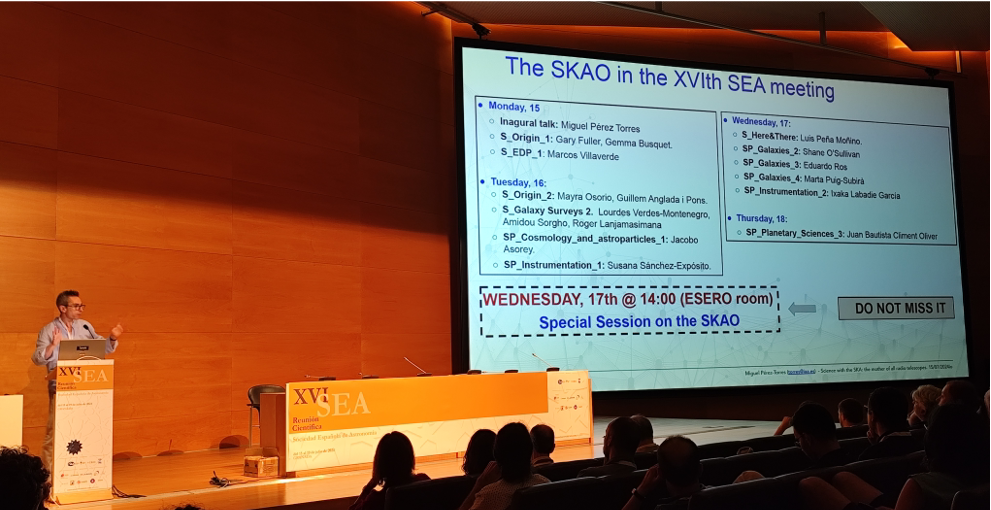
Inaugural plenary lecture “Science with SKA: the mother of all radio telescopes” by Miguel Pérez-Torres (IAA-CSIC)
In the inaugural talk, Miguel Pérez-Torres (IAA-CSIC) discussed the capabilities of SKAO telescopes and the scientific research that can be conducted with them, encouraging all attendees to become part of the SKA community by participating in the Science Working Groups. This talk can be watched in full on the SEA's YouTube channel (link). The special session on SKA focused on the latest developments at the SKA Observatory and its international network of Regional Centres (SRCNet), addressing topics such as: the timeline for the construction of SKAO telescopes, updates on scientific cases, the SKA Science Conference to be held in June 2025, the tools already available to the community, the services offered by the Spanish prototype of SKA Regional Centre at IAA-CSIC (espSRC), and the launch of the first functional version of the SRCNet in early 2025.
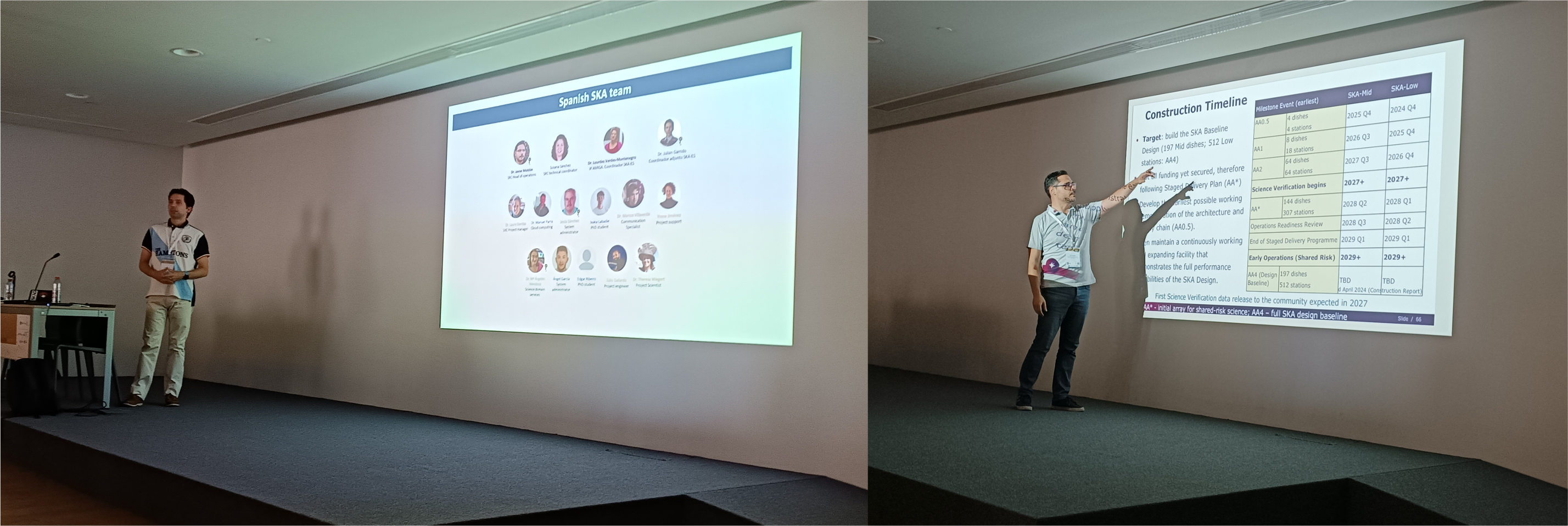
Julián Garrido (IAA-CSIC) and Javier Moldón (IAA-CSIC) during the special session on SKA
The plenary talks on the second day included a presentation by Vanessa Graber (University of Hertfordshire). In this talk, she summarised the work she conducted at the Institute of Space Sciences (ICE-CSIC) on pulsars and long-period radio transients, highlighting observations made with the Murchison Widefield Array, one of the SKAO precursors in Australia. This talk can also be viewed on the SEA's YouTube channel (link).
In the parallel sessions, the SKA project was also discussed from the scientific, technological and science communication aspects. The invited talks by Susana Sánchez (IAA-CSIC) and Lourdes Verdes-Montenegro (IAA-CSIC) were particularly focused on the SKA project. Susana Sánchez discussed Spain's contribution to SRCNet and the TED4SKA project, which aims to reduce the energy consumption of SKA Regional Centres. Lourdes Verdes-Montenegro provided a review of the study of galaxies and their environments using HI observations with SKA precursors and pathfinders.
También se presentaron otras tres charlas sobre observaciones con precursores y pathfinders de SKA: Jacobo Asorey (UCM) habló sobre Cosmología con surveys de ASKAP, Roger Ianjamasimanana (IAA-CSIC) presentó un trabajo sobre el gas en grupos compactos de Hickson realizado con observaciones de MeerKAT y Shane O’Sullivan (UCM) sobre observaciones del medio intergaláctico magnetizado realizadas en los surveys LOTSS de LOFAR y POSSUM de ASKAP.
In the instrumentation and supercomputing session, Ixaka Labadie (IAA-CSIC) presented his research on remote and interactive visualisation of spectral data cubes implemented in the espSRC, which is already being applied to MeerKAT data, a SKA precursor telescope. In a different area, Marcos Villaverde (IAA-CSIC) spoke in the session dedicated to education, outreach, and heritage about the outreach initiatives carried out by SKAO and the role of Open Science in dissemination. It is also worth mentioning a poster by David Alonso-López (UCM) on work conducted within the POSSUM-ASKAP collaboration concerning the magnetised gas in the Shapley supercluster
In addition to all this, SKAO and its telescopes were featured in other talks as a reference for the future. All of this reflects the Spanish community's interest in the SKA project and its science.
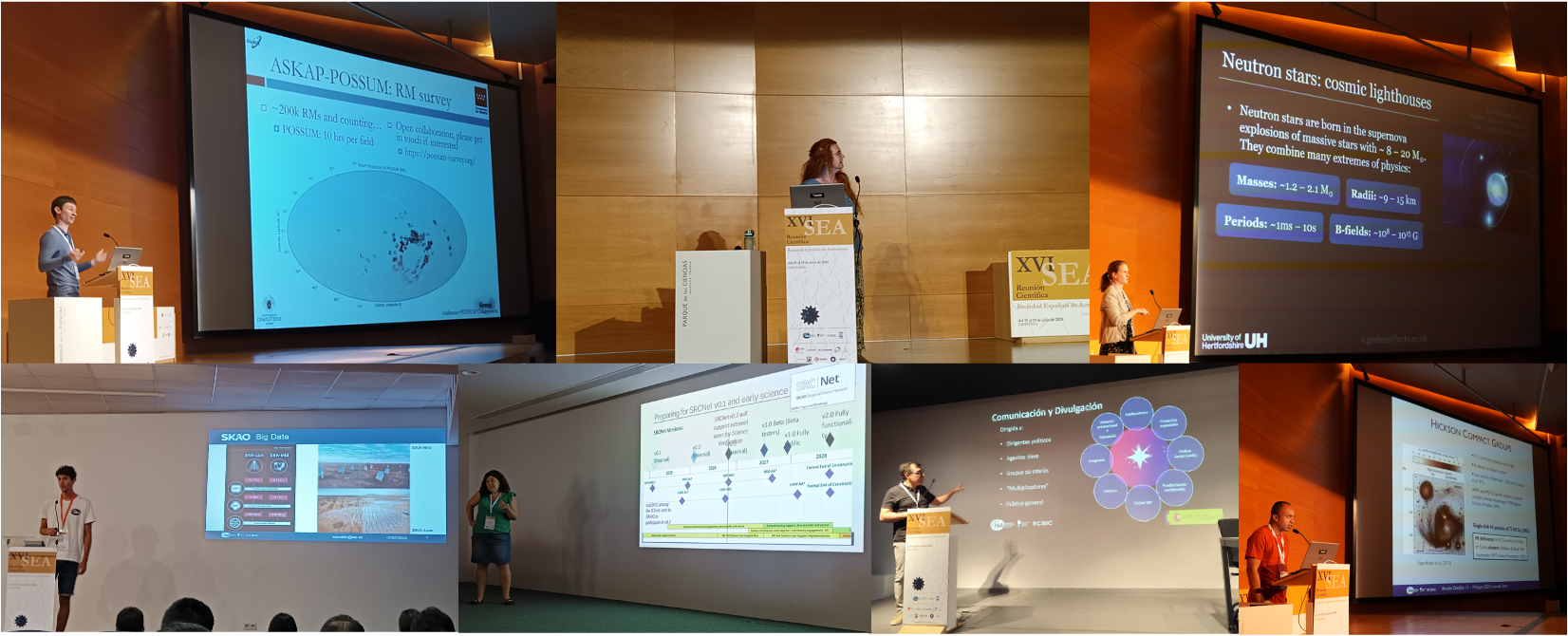
From left to right and from top to bottom: Shane O’Sullivan (UCM), Lourdes Verdes-Montenegro (IAA-CSIC), Vanessa Graber (University of Hertfordshire / ICE-CSIC), Ixaka Labadie (IAA-CSIC), Susana Sánchez (IAA-CSIC), Marcos Villaverde (IAA-CSIC) and Roger Ianjamasimanana (IAA-CSIC)
Jun 22, 2023 | All, SKA-spain, SRCs
22/06/2023 – The emerging era of Big Data is demanding a transformation in the way science is done via a growing push to make scientific research more accessible, a movement known as 'Open Science'. To explore what this means in practice for researchers, the first SKA Open Science School took place in Granada, Spain, from 8-10 May 2023, bringing together 80 participants from 14 countries.
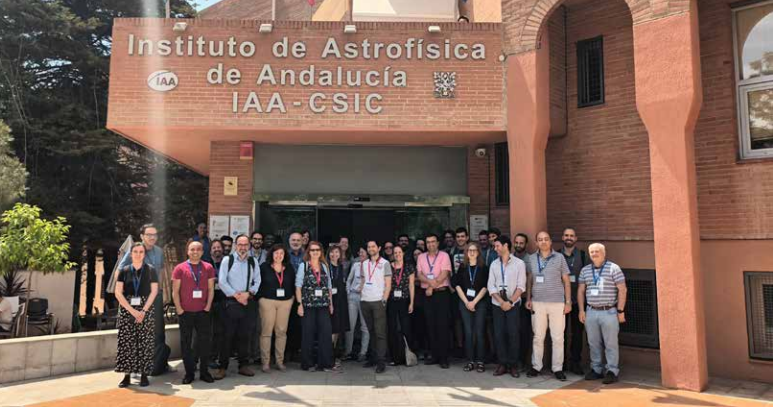
The IAA-CSIC Severo Ochoa Open Science school at the Institute of Astrophysics of Andalusia was organised as a fully hybrid meeting,
with around 50% of its participants attending online. Credit: IAA-CSIC
The hybrid school was endorsed by the SKA Regional Centre partner training programme and co-organised with the SKAO under the IAA-CSIC Severo Ochoa Programme.
Participants ranged from graduate students looking for tips on making their thesis work reproducible (making tools and techniques public so that others – and even the original researchers themselves – can achieve the same results later), to the already Open Science-savvy wanting to learn practical tools. Instructors discussed transitions in science practices with accompanying challenges, and presented practical solutions, including hands-on demos. They covered topics on how to make projects/code portable throughout new versions of software, how to best use containers and science platforms, virtual observatories, setting up citizen science projects, licenses, and more.
Discussions continued between sessions on how to change habits that give quick, publishable results (the “publish-or-perish” mentality) and instead invest the time needed for long-term open and reproducible science, including how Open Science work can be appreciated by employers. As Prof. Eva Mendez of Charles III University of Madrid (UC3M) asked: “Are we prepared for a new research evaluation?”
SKAO Scientist Dr Philippa Hartley shared the new SKAO statement on Open Science, including its mission and what Open Science will do for the SKA, and the IAA’s Dr Lourdes Verdes-Montenegro, coordinator of the Spanish participation in the SKA, noted that “large scientific infrastructures have an ethical role and a practical need in Open Science”.
Sessions from the Open Science school are publicly available
on the school webpage.
May 17, 2023 | All, Science
17/05/2023 – These bursts, which show a similar luminosity in almost all cases, are used to measure distances in the universe or to study dark energy. The study, in which the Institute de Astrophysics de Andalusia (IAA-CSIC) participates, shows that the explosion occurred in a double star system in which a white dwarf stole material from its solar-type companion. El trabajo, en el que participa el Instituto de Astrofísica de Andalucía (IAA-CSIC), muestra que la explosión se produjo en un sistema doble de estrellas en el que una enana blanca robaba material de su compañera, de tipo solar.
Type Ia supernovae are produced when a white dwarf, the "corpse" of a Sun-like star, absorbs material from a companion star and reaches a critical mass, equivalent to 1.4 solar masses, triggering an explosion whose luminosity will, given its origin, be similar in almost all cases. This uniformity made Type Ia supernovae the ideal objects for measuring distances in the Universe, but the origin and nature of the progenitor system was unknown. Now, the first radio observation of a type Ia supernova confirms that it comes from a double star system consisting of a white dwarf and a solar-type star. The results are published in the journal Nature.
"When we saw signs of a strong interaction with the companion star material in supernova SN2020eyj, we tried to observe the explosion in radio, something that had been attempted without success for decades", explains Erik Kool, a researcher at Stockholm University and lead author of the paper.
Type Ia supernovae always contain a white dwarf, which receives material from its companion. However, it was not known whether this companion was a white dwarf or a Sun-like star, something that radio imaging could reveal.
“This first radio detection of a type Ia supernova is a milestone that has allowed us to demonstrate that the exploded white dwarf was accompanied by a normal, non-degenerate star before the explosion", says Javier Moldón, a researcher at the IAA-CSIC who participated in the discovery. In addition, with these observations we can estimate the mass and geometry of the material surrounding the supernova, which allows us to better understand what the system was like before the explosion.

Artist's conception of the system that produced the supernova, in which a white dwarf star absorbs material from its companion star. Source: Adam Makarenko/W. M. Keck Observatory.
This work, whose contribution in radio data was led by the IAA-CSIC, has confirmed that the material expelled in the supernova explosion collided, after travelling sixty days, with the material surrounding the system, composed mostly of helium, which indicates that the companion star was not a white dwarf. Furthermore, models predicted that the radio emission, if present, would take many months to be detectable, and indeed the science team had to wait a year and a half to detect the supernova's radio counterpart.
“The unusual light curve of SN 2020eyj, the infrared emission, the detection of helium emission lines and the unprecedented radio detection make this supernova unique, a treasure of information with implications for multiple fields of research", says Miguel Pérez Torres, an IAA-CSIC researcher participating in the study. “Studying more similar systems will allow us to better understand the origin of these standard candles and the chemical evolution of galaxies”.
"Now that we have shown that radio observations can provide direct and unique information to understand this type of supernovae, it opens a path to study these systems with the new generation of radio instruments, such as the Square Kilometre Array Observatory (SKAO) in the future", concludes Javier Moldón (IAA-CSIC).
The result has been possible thanks to e-MERLIN, an array of very high angular resolution radio telescopes, and the analysis of the data has been carried out from the Spanish prototype of the SKA Regional Centre (SPSRC) of the IAA-CSIC, which is supported by the Severo Ochoa project of the IAA and which facilitates the processing of data from SKAO pathfinders, such as e-MERLIN.
[/et_pb_text][/et_pb_column] [/et_pb_row] [/et_pb_section]
Apr 5, 2023 | All, SKA-spain, SKAO
05/04/2023 – The Spanish contribution to the project, which amounts to 41.4 million euros until 2030, will allow Spanish companies to participate in contracts of high technological value for the construction of this scientific infrastructure. The Institute de Astrophysics de Andalusia (IAA-CSIC) is responsible for the technical coordination of the Spanish participation in the project.
The Council of Ministers has approved this Tuesday the accession of Spain as a full member of the SKA Observatory (SKAO), an intergovernmental organisation that is building two complementary world-class radiotelescopes that will constitute one of the largest and most ambitious scientific infrastructures on the planet.
The initial construction phase of the SKAO telescopes, covering the period from 2021 to 2030, will cost a total of 2,022 million euros. Spain will contribute a total of 41.4 million euros to this phase of the project, of which 7.9 million euros have already been paid between 2021 and 2022 (5.1 million euros from the Recovery, Transformation and Resilience Plan). In 2023, €2.5 million from the national budget is foreseen.
The formalisation of Spain's incorporation into the SKAO as a full member now allows Spanish companies to participate in the contracts for the construction of the two radiotelescopes, thanks to the principle of return that applies in this international organisation.
The participation of Spanish companies in at least five SKAO construction contracts is currently guaranteed. Spain will be responsible, for example, for the manufacture of the sub-reflectors (secondary mirrors) for the parabolic antennas and the production of the equipment for the time synchronisation of the radiotelescope receivers.
Spanish industry will thus increase its expertise in the many cutting-edge technologies and big data techniques that are indispensable for the operation of the SKAO and that are being developed specifically for this unique project.
Moreover, thanks to this adhesion, Spanish scientists will be able to carry out pioneering radio astronomical observations at the front line, which are destined to lead to transformational discoveries in the study of the universe.
"We are really grateful for the support of our SKAO colleagues over the years. It has been amazing to have reached this point, and we have thoroughly enjoyed the journey to get there working together with the Ministry, the CDTI and the astronomy community. Now we can move forward with even more challenging and exciting activities as part of the SKAO", declare Lourdes Verdes-Montenegro (IAA-CSIC), coordinator of the Spanish participation in SKAO.
SKAO telescopes: two innovative and revolutionary radiotelescopes
During the current construction phase, the member states of this intergovernmental organisation will agree on the contributions and the construction schedule for the next phase of the project.
The SKAO radio telescopes will consist of two arrays of hundreds of thousands of antennas of different types. The first array, dedicated to low-frequency antennas, will be located in the Murchison district of Western Australia, while the second, dedicated to medium and high frequencies, will be distributed in the Karoo Desert of South Africa.
When completed, the SKAO telescopes will be a colossal observatory: they will have tens of times the sensitivity, and thousands of times the observing speed, of the best radio astronomical facilities available today, and their performance will not be surpassed by any other radiotelescope for decades.
In addition to the scientific and technological challenges it will overcome, SKAO also faces an organisational and management challenge that is being addressed through close intergovernmental cooperation on a global scale, cooperation that will serve as a model for other large multinational projects.
Spain's participation in the SKA
Spain has been working on the design and preparatory tasks of the project since the 1990s together with the states that have already ratified the agreement establishing the SKAO - Australia, China, Italy, the Netherlands, Portugal, the United Kingdom, South Africa and Switzerland - and those that are in the process of ratifying it - Germany, Canada, South Korea, France, India, Japan and Sweden.
The technical coordination of the Spanish participation in the project is the responsibility of the Institute of Astrophysics of Andalusia (IAA-CSIC), which belongs to the Consejo Superior de Investigaciones Científicas (Spanish National Research Council), an agency of the Spanish Ministry of Science and Innovation, whose main role is to organise the national scientific community for its participation in the project.
There are currently astrophysicists from Spain involved in almost all the SKA science working teams, as well as in other groups, such as the energy supply options or the coordination of the regional centres.
Dec 13, 2022 | All, Science
13/12/2022 – The Institute of Astrophysics of Andalusia (IAA-CSIC) participates in the WEAVE scientific team, whose first observations already show the high quality of the data that the spectrograph will provide
WEAVE, a powerful state-of-the-art multifibre spectrograph installed on the William Herschel Telescope (WHT) at the Roque de los Muchachos Observatory (La Palma, Canary Islands), has obtained its first light. The instrument, whose scientific team includes the Institute of Astrophysics of Andalusia (IAA-CSIC), has obtained spectra of two of the galaxies in Stephan's Quintet, showing that WEAVE is already generating high-quality data.
The first observations were carried out with the so-called large integral field unit (LIFU) fibre bundle, one of WEAVE's three fibre systems in which 547 closely packed optical fibres transmit light in a hexagonal area of the sky to the spectrograph, where it is analysed and recorded.
The LIFU was aimed at NGC 7318a and NGC 7318b, two galaxies at the heart of Stephan's Quintet, a group of interacting galaxies. The group, 280 million light-years from Earth in the constellation Pegasus, is undergoing a major galaxy collision and provides a natural laboratory for the consequences of galaxy collisions on galaxy evolution. The spectra obtained by WEAVE reveal the motions of stars and gas, the chemical composition of the stars, the temperatures and densities of the gas clouds, among others, and provide insight into how galaxy collisions transform the galaxies in the group.
"Our goal was to host a unique instrument that would enable cutting-edge astronomical research. We are now pleased to demonstrate that the LIFU part of WEAVE not only works, but also produces high-quality data", says Marc Balcells, director of the Isaac Newton Group of Telescopes (ING) to which the telescope hosting WEAVE belongs. For his part, WEAVE principal investigator Gavin Dalton highlights "the wealth of complexity revealed by a single detailed observation of this pair of nearby galaxies, which provides an excellent illustration of the power and flexibility of WEAVE".
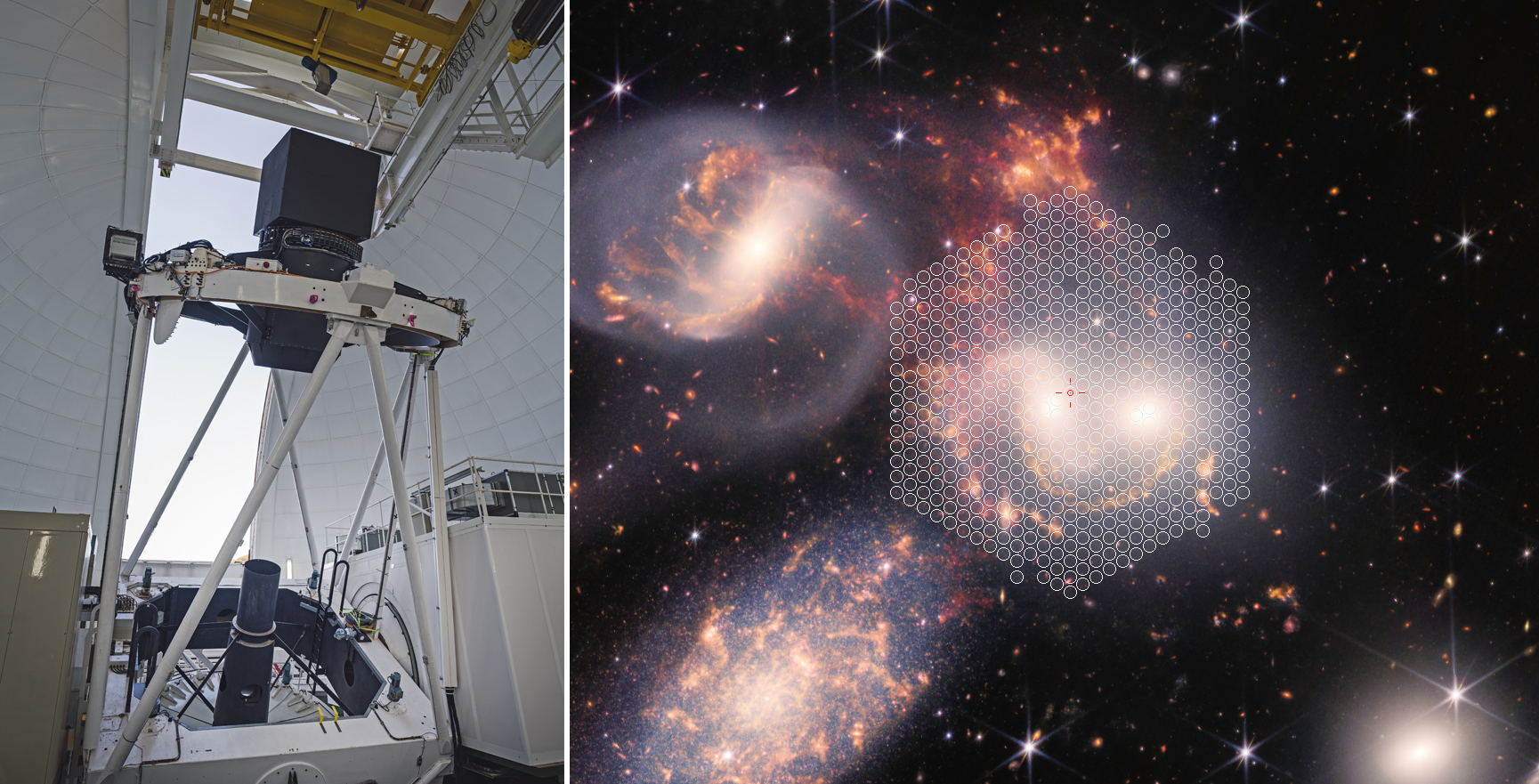
Left: The William Herschel Telescope with WEAVE. The WEAVE positioner is housed in the 1.8-metre black box above the top-end ring. Optical fibres run along the telescope structure to the light-gray enclosure on the left which houses the WEAVE spectrograph. Credit: Sebastian Kramer. Right: The JWST image with the WEAVE LIFU pointing at Stephan's Quintet for the first-light observation. The LIFU gathers light from 547 points on the sky for analysis by the WEAVE spectrograph (each circle indicates an optical fibre 2.6 arcseconds in diameter). The observation provides physical information from each separate region of each galaxy as well as the space in between. Credits: NASA, ESA, CSA, STScI (background image); Aladin (overlay with fibres).
WEAVE, A STATE-OF-THE-ART SPECTROGRAPH
WEAVE is a multi-mode, multi-fibre spectrograph built by a consortium of European astronomical institutions, led by the UK's Science and Technology Facilities Council, to become the next generation spectroscopic facility for the WHT.
WEAVE uses optical fibres to collect light from celestial sources and transmits it to a two-armed spectrograph. The spectrograph separates the light into its different wavelengths, or colours, and records them on large-format CCD light detectors. WEAVE's versatility is one of its greatest strengths. While the LIFU mode houses 547 tightly packed fibres to image large areas of the sky, in MOS mode up to 960 individual fibres can be placed separately using two robots to capture the light from many hundreds of stars, galaxies or quasars. In mIFU mode, the fibres are organised into 20 units, each consisting of 37 fibres, which are used to study small and large targets, such as nebulae and distant galaxies.
WEAVE also provides velocities along the line of sight through the Doppler effect. Depending on the science target, there is a choice between two spectral resolution powers: at low resolution, the spectra distinguish velocity differences of about 5 kilometres per second, and at high resolution of 1.2 kilometres per second. Even at its lowest power of resolution, WEAVE records the line-of-sight velocities of stars with accuracies similar to those of the transverse velocities measured by ESA's Gaia satellite.
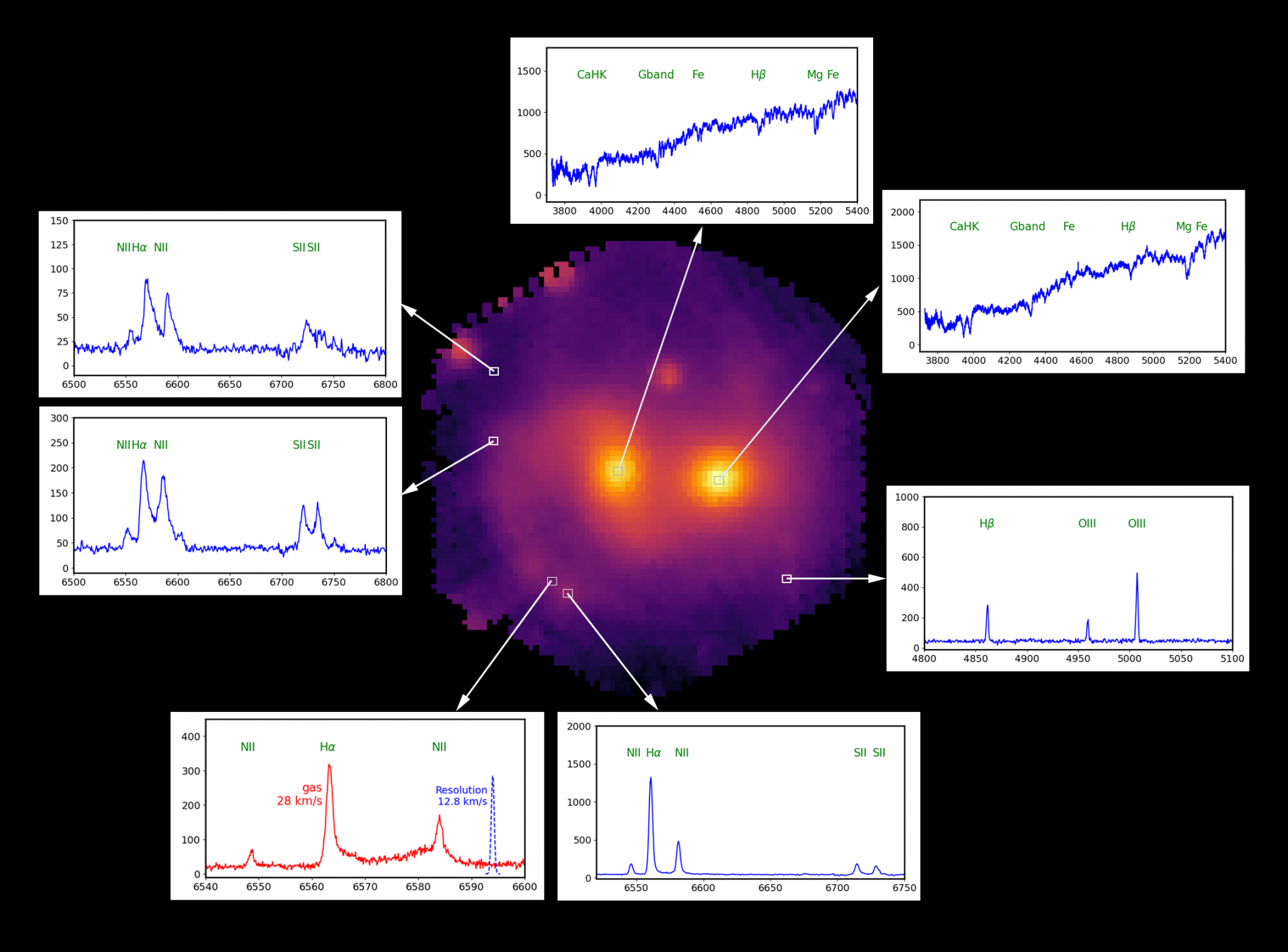
The advantage of the LIFU comes from the sheer amount of information contained in each observation. WEAVE produces spectra for each of 31,500 points or regions in and around the galaxies in two hours. The intensity of light from the fibres builds the image of the galaxies shown in the centre. The individual spectra (intensity at each wavelength; seven examples shown) provide a wealth of information about the physical conditions at each location. At the two galaxy nuclei (top-right) the spectra indicate moderately-old stars (one billion years) and no on-going star formation. The narrow, peaked spectra in the lower-right are typical of gas (hydrogen, oxygen, nitrogen, sulfur) heated to over 10,000 degrees by very young stars, whereas the broad, asymmetric peaks in the spectra shown on the left indicate turbulent shocks between gas clouds. WEAVE is particularly accurate at measuring wavelengths, or velocities. In the bottom-left panel (in red) obtained in the high spectral resolving power mode, velocity distributions as narrow as 12.8 km/s can be measured.
SCIENCE WITH WEAVE
Over the next five years, the ING will devote 70% of the time available at the WHT to eight large surveys with WEAVE, selected from those proposed by the astronomical communities of the partner countries. All of these surveys require spectra of up to millions of individual stars and galaxies, a goal made possible by WEAVE's ability to observe nearly a thousand objects at a time.
These surveys cover studies of stellar evolution, Milky Way science, galaxy evolution and cosmology. In synergy with the European Space Agency's Gaia satellite, WEAVE's MOS mode will be used to obtain spectra of several million stars in the disc and halo of our host galaxy, enabling the development of Milky Way archaeology. Nearby and distant galaxies, some detected by the LOFAR radiotelescope, will be studied for their growth history. And quasars will be used as beacons to map the spatial distribution and interaction of gas and galaxies when the universe was only about 20% of its present age.
The ING will also make 30% of the time available for projects competitively selected from among those proposed by astronomers in ING partner countries. These projects will take advantage of WEAVE's versatility to provide quick answers to immediate questions. There are also channels for programmes that jointly exploit WEAVE and the diverse capabilities of the telescopes of the Canary Islands Observatories such as the 10.4 metre Gran Telescopio Canarias.
WEAVE's construction has been funded by the Science and Technology Facilities Council (STFC, UK), the Netherlands Research School for Astronomy (NOVA, NL), the Dutch Science Foundation (NWO, NL), the Isaac Newton Group of Telescope (ING, UK/NL/ES), the Astrophysical Institute of the Canaries (IAC, ES), the Ministry of Economy and Competitiveness (MINECO, ES), the Ministry of Science and Innovation (MCI), the European Regional Development Fund (ERDF), the National Institute for Astrophysics (INAF, IT), the French National Centre for Scientific Research (CNRS, FR), Paris Observatory – University of Paris Science and Letters (FR), Besançon Observatory (FR), Region île de France (FR), Region Franche-Comté (FR), Instituto Nacional de Astrofísica, Óptica y Electrónica (INAOE, MX), National Council for Science and Technology (CONACYT, MX), Lund Observatory (SE), Uppsala University (SE), the Leibniz Institute AIP (DE), Max-Planck Institute for Astronomy (MPIA, DE), University of Pennsylvania (US), and Konkoly Observatory (HU).
Reference:
Reference:
Shoko Jin et al., 2022, "The wide-field, multiplexed, spectroscopic facility WEAVE: Survey design, overview, and simulated implementation", MNRAS, accepted for publication. http://arxiv.org/abs/2212.03981